Regain Confidence in Your First 90 Days from Dentures to Implants
Loose or uncomfortable dentures can slowly wear you down. You might worry they will move when you talk, or feel them slip when you try to enjoy a proper meal. For many people, this becomes even more noticeable as social events pick up and there are more chances to eat out, meet friends, or see family.
Moving from dentures to dental implants in Shipley can give you a steadier, more confident smile. In this guide, we walk through what usually happens in the first 90 days, from your first chat with the dentist to the point where your new fixed teeth are fitted.
If you feel nervous about treatment, you are not alone. At our Shipley practice, we plan implant care gently, with options like sedation, clear explanations, and time for you to ask questions so each step feels calm and manageable.
Is It Time to Switch From Dentures to Dental Implants?
Dentures can work well for a while, but they often start to feel less comfortable over time. Common warning signs include:
- Sore or red gums where the denture rubs
- Needing more and more adhesive to keep things in place
- Struggling to bite into firmer foods
- Worry that your teeth will move when you talk, laugh, or cough
These issues can knock your confidence and make you avoid social situations. Dental implants can help because they are fixed into the jawbone, so your replacement teeth feel more secure.
With implant treatment, many people find:
- Better stability when eating and speaking
- Less rubbing on the gums
- A clearer sense of taste, as the palate is often less covered
- More confidence in photos and conversations
Most generally healthy adults can be considered for implants, including older patients. The key is a careful, personal assessment of your mouth, your health, and your goals. At Taylored Dental Care we take time to talk through your worries, especially if you are anxious, so you can explore your options safely and at your own pace.
Your Pre-treatment Implant Planning Visit in Shipley
Your first proper step is a relaxed consultation. There is no pressure to agree to anything. We start with a simple chat about:
- What bothers you about your current dentures
- Any medical conditions or medicines
- What you would like your smile and bite to feel like
We then gently examine your mouth, including your gums, any remaining teeth, and how your jaws meet. Digital scans or X-rays help us see the bone that will support the implants. This lets us plan how many implants you need and where they should go.
Depending on your case, we might discuss:
- Implants to support a full arch of fixed teeth
- Implants to stabilise a removable denture
- Treating just one arch now and the other in future
For nervous patients, this visit is also about trust. We keep appointments unhurried, explain each option in simple language, and answer anything that is worrying you. We also talk through timeframes and the overall process before you decide if you want to continue.
Implant Placement Day and the First Two Weeks of Healing
Implant placement day often feels like the biggest step, so we plan it carefully to keep you comfortable. When you arrive, we go over the plan again and answer last-minute questions. Then we gently numb the area with local anaesthetic. If you have chosen sedation, this is given so you feel calm and relaxed.
The dentist then places the implants into the jawbone. You should feel pressure but not sharp pain. In many cases, a temporary denture or bridge is fitted at the same visit, so you are not left without teeth while everything heals.
Afterwards, it is normal to have:
- Numbness for a few hours
- Mild swelling or bruising in the gums or cheeks
- Aching or discomfort once the numbness wears off
We give you clear advice on pain relief, how often to take it, and when to get in touch if something does not feel right. You also go home with written instructions so you do not have to remember everything.
For the first 14 days, healing is just getting started, so you should:
- Stick to softer foods and chew away from the surgery area
- Keep your mouth clean using gentle brushing and any mouthwash we recommend
- Avoid smoking and alcohol while tissues heal
- Rest, and avoid heavy exercise for a few days
- Attend your review appointment so we can check your progress
Many people find that after the first week things feel much easier, with swelling beginning to settle.
Weeks Three to Twelve: Osseointegration and Getting Back to Normal
After the early healing, your body starts the deeper work called osseointegration. This is where the bone slowly bonds to the implants, usually over several weeks. It is a quiet process, but it is what helps your implants act like firm roots for your future teeth.
During this phase, day-to-day life gradually feels more normal again. Typically you can:
- Increase the range of foods you eat, listening to your body as you go
- Get used to speaking and chewing with your temporary teeth
- Plan your diary without worrying about dentures slipping at social events
You still need to keep your implants and gums very clean. We show you how to brush and clean around the area without disturbing healing. Short, regular review visits at Taylored Dental Care allow us to:
- Check the gums and bone around each implant
- Adjust your temporary teeth if they feel high or uneven
- Take impressions or digital scans when the time is right, ready for your final fixed teeth
By the end of this period, most people feel much more settled and often say they forget the implants are there from day to day.
Fitting Your New Teeth and Staying Comfortable Long Term
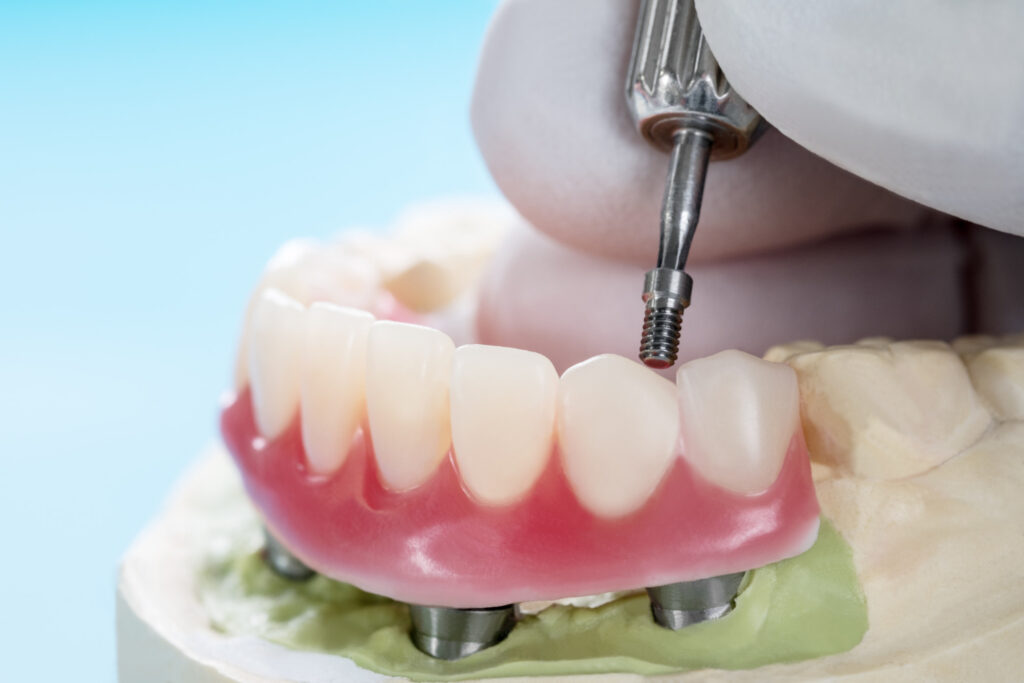
When the implants and bone are nicely settled, it is time to fit your new teeth. First, we attach small connectors, called abutments, to the implants. These act like posts that your final bridge or denture will attach to.
We then take careful measurements so the dental laboratory can make teeth that match your face, smile line, and bite. On fitting day, we secure the new teeth to the implants and check how your upper and lower teeth meet. Small, precise adjustments to your bite help eating feel natural and secure.
Many people notice a big lift in confidence at this stage. Smiling, talking, and having photos taken often feels easier when you are not worried about movement or gaps.
To keep everything healthy long term, we usually recommend:
- Brushing twice a day with a soft toothbrush
- Cleaning carefully around the implants with the tools we suggest
- Regular hygiene visits in Shipley or another Taylored Dental Care location
- Ongoing check-ups so we can spot and solve small issues early
With good daily care and professional support, your implants and new teeth can stay comfortable and reliable for many years, giving you the freedom to eat, speak, and smile with confidence.
Restore Your Confident Smile With Trusted Implant Care
If you are ready to replace missing teeth with a solution that looks and feels natural, our team at Taylored Dental Care is here to help. Learn more about how dental implants in Shipley could improve your comfort, confidence and oral health for the long term. To book an appointment or ask any questions, simply contact us and we will guide you through your next steps.